
Kalighat Kali Temple is one of the most revered Hindu temples in India, dedicated to Goddess Kali and located in the historic Kalighat area of Kolkata, West Bengal . This ancient shrine holds immense spiritual significance as one of the 51 Shakti Peethas, sacred sites where body parts of Goddess Sati are believed to have fallen when Lord Shiva carried her burnt corpse in his cosmic dance of destruction, the Rudra Tandava . According to legend, the toes of Sati’s right foot landed at Kalighat, making this spot exceptionally powerful for spiritual seekers and devotees of the Divine Mother .
The name “Kolkata” itself is said to be derived from the word “Kalighat,” highlighting the temple’s deep connection with the city’s identity and cultural heritage . The temple was originally located on the banks of the Hooghly River, but over time, the river changed its course, and today the temple stands near a small canal called Adi Ganga, which connects to the Hoogly .
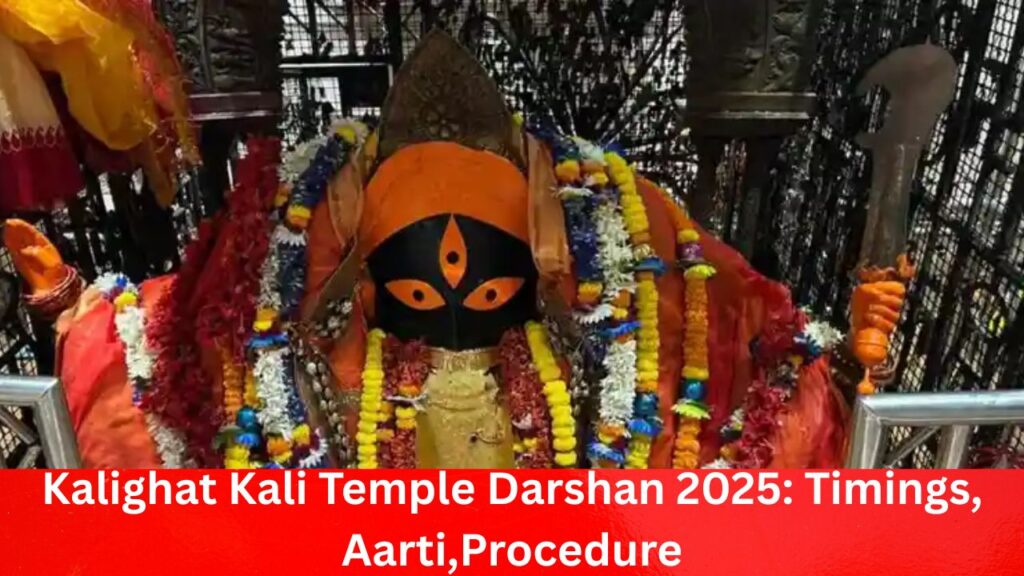
The current structure of Kalighat Kali Temple was completed in 1809 under the patronage of the Sabarna Roy Choudhury family, with construction beginning in 1798 and taking 11 years to complete . The temple has undergone recent renovations and now stands as a beautifully restored landmark that should be on everyone’s must-visit list when in Kolkata .
Bhramaramba Mallikarjuna Temple 2026: Darshan, Sevas, and Pilgrimage
Temple Overview and Key Information
| Aspect | Details |
|---|---|
| Temple Name | Kalighat Kali Temple |
| Location | Anami Sangha, Kalighat, Kolkata, West Bengal 700026 |
| Primary Deity | Goddess Kali (worshipped as Kalika) |
| Consort Deity | Lord Nakuleshwar Bhairav |
| Significance | One of the 51 Shakti Peethas (right toe of Sati fell here) |
| Year Built | Current structure completed in 1809 |
| Patron Family | Sabarna Roy Choudhury family |
| Best Time to Visit | October to March (pleasant weather) |
| Ideal Visit Duration | 1 to 2 hours |
| Entry Fee | Free for all devotees |
| Photography | Not allowed inside the temple, especially in sanctum areas |
| Mobile Phones | Not allowed inside |
| Contact Number | 033 2243 6440 |
Daily Temple Timings 2026
Kalighat Kali Temple follows a consistent daily schedule, though it’s important to note that timings may vary slightly on special festival days and during important rituals . The temple operates in two sessions with a midday break.
| Session | Timings | Details |
|---|---|---|
| Morning Session | 5:00 AM – 2:00 PM | Temple opens with Mangal Aarti at 5:00 AM |
| Afternoon Break | 2:00 PM – 5:00 PM | Temple remains open but darshan paused for Bhog offering and deity rest |
| Evening Session | 5:00 PM – 10:30 PM | Evening darshan and Sandhya Aarti |
On Sundays and Saturdays, the closing time extends to 11:30 PM, while on weekdays it closes at 10:30 PM . The temple is open all seven days of the week with no closed days .
Complete Aarti Schedule
The temple conducts four main aartis daily, each with specific timing and significance. Attending these ceremonies offers a profound spiritual experience.
| Aarti Name | Timings | Description |
|---|---|---|
| Mangal Aarti | 4:00 AM – 4:30 AM | First aarti of the day, opening prayers to awaken the Goddess |
| Nitya Puja | 5:30 AM – 7:00 AM | Regular morning worship and rituals |
| Bhog Aarti | 12:00 PM – 12:30 PM | Midday offering of food to the deity |
| Sandhya Aarti | 6:30 PM – 7:00 PM | Evening prayer ceremony with lamps and chants |
| Shayana Aarti | 10:00 PM – 10:15 PM | Final aarti before the deity retires for the night |
Prayer ceremonies (aartis) are held in the morning and evening around sunrise and sunset . The evening aarti (Sandhya Aarti) is particularly popular among devotees and creates a mesmerizing atmosphere of devotion.
Best Time to Visit: Seasonal Guide
The ideal time to visit Kalighat Kali Temple depends on your preferences for weather, crowd levels, and festival experiences. Here’s a seasonal comparison to help you plan:
| Season | Months | Temperature | Crowd Level | Festival Activity | Recommendation |
|---|---|---|---|---|---|
| Winter | Nov-Feb | 12-25°C | High | Moderate with peaks during Makar Sankranti | ★★★★★ |
| Spring | Mar-Apr | 20-35°C | Moderate | High during Chaitra Navratri | ★★★★☆ |
| Summer | May-Jun | 25-40°C | Low to Moderate | Low except specific holy days | ★★★☆☆ |
| Monsoon | Jul-Oct | 25-35°C | Variable | Very high during Durga Puja & Kali Puja | ★★★★☆ |
Winter (November to February) is considered the best time for most visitors, offering pleasant temperatures perfect for queuing and temple exploration. Early winter mornings (6:00-8:00 AM) provide the most tranquil experience with shorter queues and a more serene atmosphere .
Festival Season (September-October) offers an unparalleled cultural experience during Durga Puja and Kali Puja, though crowds are extremely heavy with waiting times of 3-5 hours or more. The temple becomes the epicenter of Bengal’s most important religious celebrations with elaborate decorations and special ceremonies .
Summer Months (May-June) provide solitude for those seeking a more private spiritual experience with significantly reduced crowds on weekdays. Early morning visits (5:00-7:00 AM) are strongly recommended to avoid the intense afternoon heat .
Best Hours for Darshan by Visitor Type
For different types of visitors, certain hours prove more advantageous. Understanding these can greatly enhance your experience at Kalighat.
| Visitor Type | Recommended Time | Benefits |
|---|---|---|
| Spiritual Seekers | 5:00 AM – 7:00 AM or 9:00 PM – 10:00 PM | Witness morning rituals, peaceful atmosphere, fewer crowds |
| Tourists | 10:00 AM – 11:30 AM or 3:30 PM – 5:30 PM | After morning rush, before midday closure, manageable crowds |
| Families with Children | 9:00 AM – 11:00 AM (weekdays) | Manageable crowds, full access to facilities |
| Photography Enthusiasts | 7:00 AM – 8:00 AM or 4:00 PM – 5:30 PM | Beautiful lighting for exterior shots, less crowded surroundings |
Important: Crowds thin significantly after 8 PM, with hardly any queue needed at that time . This is an excellent option for those who prefer a quieter darshan experience.
Darshan Procedure and Ticket Information
Kalighat Kali Temple offers two primary ways to receive darshan of the Goddess. Understanding the queue system can help you plan accordingly.
Regular Queue:
- Cost: Free
- Wait Time: 1-3 hours on regular days, 3-8+ hours during festivals
- Experience: Authentic, immersive, but can be rushed during peak times
Special Darshan (VIP Line):
- Cost: ₹100-150 per person (officially)
- Wait Time: 10-30 minutes typically
- Benefits: Closer darshan, slightly more time at the sanctum
- How to Access: Through designated temple officials near the south entrance
Important Note: Some unofficial priests (pandas) may demand fees ranging from ₹500-1,500 for VIP line access. It’s advisable to use only official channels and be aware that some priests prioritize money over religious service . For most first-time visitors, the special darshan option provides a better balance of experience and convenience, especially during busy periods .
Tips to Avoid Long Queues:
- Visit after 8 PM when crowds thin considerably
- Avoid Tuesdays and Saturdays, which are considered especially sacred for Kali worship and draw larger crowds
- Weekday mornings are generally less crowded than weekends
The Unique Deity: Understanding the Kalighat Kali Idol
The Kali murti (idol) at Kalighat has distinctive features that set it apart from other Kali images found across India. This unique representation adds to the temple’s spiritual significance.
Unique Features of the Deity :
- Only the face visible: Unlike most Kali images, only the face of the goddess is visible to devotees
- Protruding golden tongue: Made of gold, symbolizing the goddess’s power and fierceness
- Three large silver eyes: Representing the goddess’s all-seeing nature
- Gold-adorned arms: Four arms with gold ornaments
Symbolism of the Attributes :
- Sword: Implies Divine Knowledge
- Detached human head: Represents human ego that must be killed by Divine Knowledge to attain Moksha (liberation)
- Abhaya mudra: One hand in blessing gesture, meaning devotees will be saved
- Varada mudra: Other hand in boon-granting gesture
Devotees believe that making eye contact with the deity (darshan) brings special blessings and protection from negative energies .
Sacred Offerings and Prasadam
Devotees at Kalighat Kali Temple offer a variety of items to express their devotion and seek blessings from the Goddess. Local priests (pandas) can guide devotees on appropriate offerings based on their specific intentions and the day’s rituals .
Common Offerings to the Goddess :
- Red hibiscus flowers: Considered especially sacred to Kali
- Incense sticks (agarbatti)
- Saris (red cloth)
- Sweets
- Sindoor (vermilion)
Prasadam Available :
- Cooked rice (Anna Prasad)
- Fruits
- Sweets
Prasadam can be obtained within the temple complex or purchased from vendors outside the temple gates. Specific arrangements for larger offerings can be made with the temple priests .
Temple Architecture and Sacred Spaces
The Kalighat temple complex features several distinct areas that contribute to its architectural and spiritual significance.
| Sacred Space | Description |
|---|---|
| Natmondir | Large rectangular covered platform adjacent to the main temple from where the face of the image can be seen |
| Jor-bangla | Spacious verandah of the main temple facing the image, through which rituals can be observed |
| Sosthi Tala (Monosha Tala) | Three-foot-high rectangular altar with a small cactus plant and three stones representing Goddesses Sosthi, Sitola, and Mongol Chandi |
| Harkath Tala | Located south of Natmondir, used for traditional offerings |
| Shamo-ray Temple | Radha-Krishna temple on the west side of the main temple |
| Kundupukur | Sacred tank situated in the southeast of the temple where the right toe of Sati was discovered |
Snan Yatra (Ceremonial Bath): During Snanyatra day, a ceremonial bath is given to the mother goddess. During this time, priests tie their eyes with cloth .
Important Festivals at Kalighat
Kalighat Kali Temple comes alive during several major festivals throughout the year. The temple sees its largest crowds during these celebrations.
| Festival | Time | Significance |
|---|---|---|
| Kali Puja | October-November (following Durga Puja) | Most important festival dedicated to Goddess Kali; elaborate decorations and special rituals |
| Durga Puja | September-October | Bengal’s grandest festival; temple becomes center of celebrations |
| Poila Boishakh (Bengali New Year) | April 14-15 | Traditional Bengali New Year celebrations |
| Snan Yatra | During festival periods | Ceremonial bath of the deity with priests’ eyes covered |
| Sankranti | Monthly | Each month’s Sankranti day draws devotees |
During Kali Puja and Durga Puja, waiting times can extend to 3-5 hours or more. However, the electric atmosphere, elaborate decorations, and special ceremonies make these visits unforgettable cultural experiences .
How to Reach Kalighat Kali Temple
Kalighat is well-connected to all parts of Kolkata through various modes of transport. The temple’s central location makes it easily accessible.
| Transport Mode | Details |
|---|---|
| By Metro | Kalighat Metro Station is the nearest, about a 10-minute walk from the temple |
| By Road | State Transport Buses and private taxis operate regularly from various parts of Kolkata |
| By Train | Nearest railway stations: Howrah Junction and Sealdah Railway Station |
| By Air | Netaji Subhas Chandra Bose International Airport, approximately 20 km away |
Nearby Landmarks:
- Mother Teresa’s Home for the Sick and Dying Destitute: 2-minute walk
- Ballygunge area: Just southwest of this neighborhood
- Maidan, Victoria Memorial, and Park Street: South of these tourist-friendly areas
The temple is not wheelchair-accessible and can become very crowded during peak times .
Important Visitor Guidelines and Tips
To ensure a smooth and spiritually fulfilling visit, follow these essential guidelines based on recent visitor experiences.
| Aspect | Guidelines |
|---|---|
| Dress Code | Modest attire recommended; traditional Indian clothing appreciated |
| Footwear | Must be removed before entering |
| Photography | Restricted, especially in sanctum areas |
| Mobile Phones | Not allowed inside |
| Security | Be prepared for security checks; avoid carrying valuables |
Essential Tips from Recent Visitors :
- The temple has been renovated and looks very beautiful after recent renovations
- Shoes can be kept outside at designated counters
- Crowds thin considerably after 8 PM with hardly any queue needed
- No tickets are required for regular darshan
- Be aware that some priests (pandas) may create chaos and push people away, even when the temple is empty
- Queue management has improved after renovation
Warnings:
- The daily goat sacrifice near the temple may be upsetting to children and sensitive people
- Some duplicate priests (fraud pujaris) may try to extract money from unsuspecting devotees
- Avoid Tuesdays and Saturdays to escape the heaviest crowds
Frequently Asked Questions (FAQs)
Q1: What are the darshan timings for Kalighat Kali Temple?
The temple is open from 5:00 AM to 2:00 PM and again from 5:00 PM to 10:30 PM daily. On Sundays and Saturdays, evening hours extend to 11:30 PM .
Q2: Is there an entry fee for the temple?
No, entry is completely free for all devotees. Special darshan (VIP) tickets may cost ₹100-150 if purchased officially .
Q3: What are the aarti timings at Kalighat?
Mangal Aarti: 4:00-4:30 AM, Nitya Puja: 5:30-7:00 AM, Bhog Aarti: 12:00-12:30 PM, Sandhya Aarti: 6:30-7:00 PM, Shayana Aarti: 10:00-10:15 PM .
Q4: What is the best time to visit to avoid crowds?
Visit after 8 PM when crowds thin considerably, or on weekday mornings between 9-11 AM. Avoid Tuesdays, Saturdays, and festival periods .
Q5: Why is Kalighat Temple so famous?
It is one of the 51 Shakti Peethas, where the right toe of Goddess Sati fell. The city of Kolkata derives its name from “Kalighat” .
Q6: Are mobile phones allowed inside?
No, mobile phones are not allowed inside the temple .
Q7: Is photography permitted?
Photography is restricted, especially in the sanctum areas .
Q8: What offerings are made to the goddess?
Devotees offer red hibiscus flowers, incense sticks, saris, sweets, and sindoor .
Q9: What is the dress code for visiting?
Modest attire is recommended. Traditional Indian clothing is appreciated but not mandatory .
Q10: Which festivals are celebrated at Kalighat?
Kali Puja, Durga Puja, Poila Boishakh (Bengali New Year), and Sankranti are the main festivals .
Q11: How do I reach Kalighat Temple?
The nearest metro station is Kalighat Metro Station, about a 10-minute walk away. Buses, taxis, and rickshaws are also available .
Q12: Are there any special considerations for visitors?
Be aware of unofficial priests who may try to extract money. The daily goat sacrifice may be upsetting to sensitive visitors. Temple management has improved after renovation .