
The Shree Jagannath Temple in Puri, Odisha, stands as one of the most sacred pilgrimage destinations in India, revered as a Char Dham site alongside Rameswaram, Badrinath, and Dwarka . Dedicated to Lord Jagannath (a form of Lord Vishnu), this 12th-century architectural marvel draws millions of devotees annually who come to seek blessings at this spiritual epicenter of Vaishnavism .
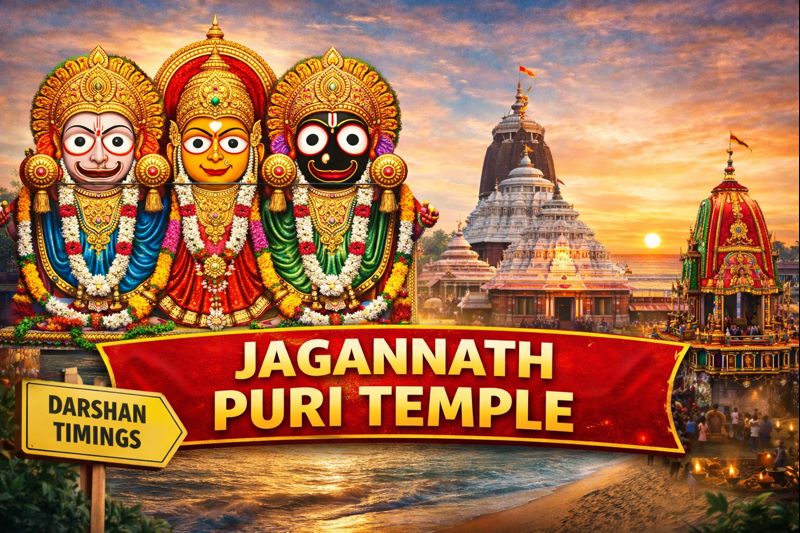
Constructed originally by King Indradyumna and later restructured by Anantavarman Chodaganga of the Eastern Ganga dynasty, the temple is a masterpiece of Kalinga architecture, featuring towering structures, intricate carvings, and a sprawling 200 x 200 meter complex . The temple is famous for its unique rituals, elaborate seva system involving thousands of servitors, and the world-renowned Rath Yatra festival where the deities emerge from the sanctum to bless their devotees .
Jagannath Temple Darshan Timings 2026
The temple follows a detailed daily schedule with specific rituals throughout the day. Darshan is generally available between 5:00 AM and 11:30 PM, though it is temporarily suspended during certain rituals .
Complete Daily Schedule 2026
| Activity | Timing |
|---|---|
| DWARAPHITA (Opening of Doors) | 4:30 AM |
| Darshan Hours | 5:00 AM – 11:30 PM |
| Mangala Alati (Morning Aarti) | 5:30 AM |
| Mailam | 6:00 AM |
| Abakasha | 6:30 AM |
| Surya Puja | 7:45 AM |
| Sakala Dhupa (Morning Bhog) | 9:00 AM – 10:00 AM |
| Bhoga Mandap | 11:30 AM |
| Madhyahna Dhupa (Midday Bhog) | 12:00 PM |
| Sandhya Alati | 6:00 PM |
| Sandhya Dhupa | 6:30 PM – 8:00 PM |
| Badasinghara Besha | 9:00 PM – 10:00 PM |
| Badasinghara Dhupa | 10:30 PM – 11:00 PM |
| Khata Seja Lagi & Pahuda (Night Rituals) | 11:30 PM |
Important Note: Darshan is temporarily suspended during certain rituals. The early morning hours (5:00 AM – 9:00 AM) are considered the best time for a peaceful darshan . On special ritual days like Banakalagi Niti, darshan may be suspended for several hours (typically 6 PM – 10 PM) .
Darshan Restrictions During Snana Yatra Period
Worshipping the deity (darshan) is not permitted in the 15 days following the full moon during the month of Jyestha (May–June)—this is the Snana Yatra period when the deities undergo a ritual bath .
Jagannath Temple Darshan Ticket Prices & Seva Booking
Darshan Ticket Price List 2026
| Darshan Type | Price (INR) | Notes |
|---|---|---|
| General Darshan | Free | Standard entry; longer queues |
| Beshalagi Darshan | ₹1.50 | Nominal charge |
| Parimanik Darshan | ₹10 | Moderate crowd access |
| Special Darshan | ₹100 | Quick access |
| VIP Darshan | ₹500 | Priority entry; includes water service, Mahaprasad access, and assistance for senior citizens |
Key Rituals and Offerings
The temple follows both Tantric and Vedic rituals, with several daily services performed by the 119 categories of hereditary servitors :
- Mangala Arati: Early morning auspicious lamp lighting
- Bhoga Offerings: Sacred food offered multiple times daily (Sakala Dhupa, Madhyahna Dhupa, Sandhya Dhupa)
- Sandhya & Badasinghara: Evening adoration of the deities
- Pahuda: Night ritual when the Lord rests
How to Book Darshan and Seva Online
Step-by-Step Online Booking Process
Step 1: Visit the official Shree Jagannatha Temple Administration website: https://www.shreejagannatha.in
Step 2: Click on “Visitor Services” and select “Darshan Facilities”
Step 3: Click “Book Now” and enter your details (name, contact, ID proof)
Step 4: Select your preferred Darshan type and date
Step 5: Complete payment (for paid darshan options)
Step 6: Receive confirmation via SMS/Email with your booking ID
Step 7: Download or print your e-ticket for entry
Important Booking Notes
- Tickets are on a first-come-first-served basis, so early reservation is crucial for securing preferred dates
- 50% advance payment is required for early bookings; balance must be cleared before 7 days of departure
- Valid government ID is mandatory
- Foreign nationals must share passport details
Cancellation Policy (if applicable)
| Timeline | Charges |
|---|---|
| Before 41 days | 20% |
| 30 days | 30% |
| 21–15 days | 65% |
| 14–8 days | 80% |
| Less than 8 days | 100% |
Festivals at Jagannath Temple
Rath Yatra (Chariot Festival)
The Rath Yatra is the most spectacular festival at Puri, where the three deities—Lord Jagannath, Lord Balabhadra, and Devi Subhadra—are taken out in grand chariots to the Gundicha Temple. This festival attracts millions of devotees and is a once-in-a-lifetime spiritual experience. The Gajapati Maharaja performs the sacred Chhera Pahanra (sweeping the chariots with a golden broom) during this festival .
Other Major Festivals
| Festival | Significance |
|---|---|
| Snana Yatra | Ritual bath of the deities (May–June); darshan suspended for 15 days after |
| Chandan Yatra | Spring festival with boat processions |
| Nabakalebara | Rare ceremony when the deities’ idols are renewed (occurs every 12-19 years) |
| Banakalagi Niti | Special ritual where the deities are adorned with natural colors; darshan may be suspended during this ceremony |
Dress Code and Temple Guidelines
Mandatory Dress Code (Strictly Enforced)
| Gender | Required Attire | Prohibited |
|---|---|---|
| Men | Dhoti-Kurta or formal trousers (covering knees and shoulders) | Shorts, torn jeans, sleeveless shirts |
| Women | Saree, Salwar Kameez, or Half-Saree with dupatta | Sleeveless tops, revealing clothing |
Important Rules
- No leather items (belts, wallets, bags) are permitted inside the temple
- Bathe before coming and wear clean clothes
- Follow the queue system
- Only eat vegetarian food on the premises
- Deposit footwear at designated stands before entering
Special Note on Snana Yatra Period
Darshan is not permitted in the 15 days following the full moon during the month of Jyestha (May–June) . Plan your visit accordingly.
Facilities for Senior Citizens
- VIP Darshan includes priority access, drinking water, and assistance for elderly visitors
- Dedicated rows and battery-operated vehicles for elderly devotees are available to reduce walking distance
How to Reach Jagannath Temple
By Air
Biju Patnaik International Airport (BBI), Bhubaneswar is the nearest airport, approximately 60 km from Puri . Direct flights from major cities like Bengaluru (2 hours), Delhi, Mumbai, and Kolkata are available. From the airport, taxis and buses are available to Puri (1.5 hours drive) .
By Train
Puri Railway Station is well-connected to major cities across India. Key trains include:
- Puri Express from Delhi
- Howrah-Puri Express from Kolkata
- Prashanthi Express from Bengaluru (approx. 24-29 hours)
By Road
Puri is well-connected by state highways and national highways. Regular bus services operate from Bhubaneswar, Cuttack, and other cities in Odisha. Private taxis and cabs are also available for hire.
Temple Address
Shree Jagannatha Temple, Grand Road, Puri, Odisha – 752001
Accommodation Options Near Jagannath Temple
| Hotel Name | Distance from Temple | Price Range (per night) | Rating |
|---|---|---|---|
| Hotel Janaki Pride | 5-min drive | ~US$29 | Amazing (9.4/10) |
| The Adventure Convention & Resort | ~15km | US$43 | Outstanding (10.0/10) |
| Hotel VIP Square | Nearby | US$38 | Good (7.8/10) |
| Goroomgo Grand Inn Lodge | Nearby | US$14 | Good (7.6/10) |
| Jagannath Ballav Bhakta Niwas | 2 km | US$12 | Good (7.7/10) |
| Toshali Sands Nature Escape | ~8 km | US$63 | Very Good (8.6/10) |
Nearby Attractions
| Attraction | Distance | Highlights |
|---|---|---|
| Puri Beach (Golden Beach) | 2 km | Scenic beach for relaxation and sunset views |
| Konark Sun Temple | 35 km | UNESCO World Heritage Site; stunning Kalinga architecture |
| Chilika Lake | 50 km | Asia’s largest brackish water lagoon; dolphin spotting and boat cruises |
| Gundicha Temple | 3 km | Destination of Rath Yatra chariots |
| Lingaraj Temple | 60 km (Bhubaneswar) | Ancient Shiva temple |
| Dhauli Shanti Stupa | 65 km | Peace pagoda commemorating Kalinga War |
| Raghurajpur Artist Village | 10 km | Known for Pattachitra paintings |
Travel Tips for Jagannath Temple Visit
Best Time to Visit
- October to March: Pleasant weather, ideal for sightseeing
- Early morning (5:00 AM – 9:00 AM) : Best for peaceful darshan
- Avoid: May–June (Snana Yatra period) when darshan is restricted
- Avoid: Afternoon hours when rituals may temporarily close darshan
What to Carry
- Valid government ID (Aadhaar, Passport, Voter ID)
- Printed or digital booking confirmation
- Small cash for offerings and local expenses
- Water bottle (plastic bottles may be restricted; use reusable)
- Comfortable footwear (to be removed before entering)
What NOT to Carry
- Leather items (belts, wallets, bags)
- Mobile phones inside the sanctum (may be restricted)
- Cameras and recording devices
- Large bags and luggage (lockers available)
- Non-vegetarian food and alcohol
Food Recommendations
- Mahaprasad (Abadha) : Must-try sacred food offered to Lord Jagannath
- Agarwals Veg and Amrutam: Highly-rated South Indian vegetarian restaurants for travelers preferring familiar tastes
Cash Recommendations
For a 4-day trip, carry approximately ₹5,000–₹8,000 in cash for temple offerings (Dakshina), local rickshaws, and buying handicrafts at Pipili or Raghurajpur where digital payments may be slow .
Frequently Asked Questions (FAQs)
Q1: What are the Jagannath Temple darshan timings for 2026?
A: The temple is open from 5:00 AM to 11:30 PM daily. However, darshan is temporarily closed during certain rituals. Early morning (5:00 AM – 9:00 AM) is the best time for a peaceful experience .
Q2: Is there an entry fee for Jagannath Temple?
A: General Darshan is free. Special Darshan tickets range from ₹1.50 to ₹500 for faster access and VIP services .
Q3: How can I book Jagannath Temple darshan online?
A: Visit the official website shreejagannatha.in, click on “Visitor Services”, select “Darshan Facilities”, enter details, choose date and darshan type, complete payment, and download your e-ticket .
Q4: What is the dress code for Jagannath Temple?
A: Men must wear dhoti-kurta or formal trousers (no shorts or torn jeans). Women must wear saree, salwar kameez, or half-saree with dupatta. Leather items are strictly prohibited .
Q5: Are there facilities for senior citizens?
A: Yes, VIP Darshan includes priority access for elderly visitors. The temple also has dedicated rows and battery-operated vehicles to assist seniors .
Q6: Can non-Hindus enter the Jagannath Temple?
A: Only Hindus are permitted inside the temple. Non-Hindus may view the temple complex from the library building opposite, but cannot enter the inner sanctum .
Q7: Is there a restriction on darshan during Snana Yatra?
A: Yes, darshan is not permitted in the 15 days following the full moon during the month of Jyestha (May–June) .
Q8: What is the Banakalagi ritual?
A: Banakalagi is a sacred ritual where the deities are adorned with natural colors. During this ceremony, public darshan may be suspended for 4-5 hours .
Q9: How do I reach Puri from Bangalore?
A: Direct flights from Bengaluru (BLR) to Bhubaneswar (BBI) take about 2 hours, followed by a 1.5-hour drive to Puri. Trains like Prashanthi Express and Duronto Express are also available but take 24-29 hours .
Q10: Are there good vegetarian restaurants near the temple?
A: Yes, Puri has several highly-rated vegetarian restaurants including Agarwals Veg and Amrutam, serving excellent South Indian thalis, idli, and dosa .
Q11: Is photography allowed inside the temple?
A: Photography is strictly prohibited inside the temple premises. Mobile phones and cameras may be restricted.
Q12: What is the significance of the Gajapati Maharaja?
A: The Gajapati Maharaja, King of Puri, is the first sevayat (servitor) of Lord Jagannath. He performs the sacred “Chhera Pahanra” (sweeping the chariots) during Rath Yatra .
Temple Contact Information
| Purpose | Details |
|---|---|
| Official Website | https://www.shreejagannatha.in |
| Phone Number | +91-6752-222002 |
| Alternate Phone | +91 6752 252 900 |
| jagannath[dot]or[at]nic[dot]in | |
| Address | Shree Jagannatha Temple, Grand Road, Puri, Odisha – 752001 |
| Nearest Airport | Biju Patnaik International Airport, Bhubaneswar (60 km) |
| Nearest Railway Station | Puri Railway Station (2 km) |
Conclusion
The Jagannath Temple in Puri is not just a place of worship—it is a living embodiment of India’s spiritual heritage, a testament to architectural brilliance, and a vibrant center of devotion that has flourished for over 800 years. With its unique rituals, the world-famous Rath Yatra, and the sacred Mahaprasad, a visit to this Char Dham site is a transformative pilgrimage experience.
For your 2026 visit, plan your darshan during the early morning hours for a peaceful experience, book your special darshan tickets online through the official portal, adhere to the strict dress code, and respect the temple’s traditions. Whether you are attending the grand Rath Yatra, seeking blessings during the quieter months, or exploring the architectural marvels of the Kalinga style, the divine presence of Lord Jagannath awaits you with open arms.