
Srikalahasti Temple is one of South India’s most ancient and spiritually significant Shiva temples and a major pilgrimage destination in Andhra Pradesh, located on the banks of the Swarnamukhi River in Srikalahasti town of Tirupati district. It is dedicated to Lord Srikalahasteeswara (a form of Lord Shiva) and his consort Goddess Gnana Prasunambika Devi, and is revered as one of the Pancha Bhoota Sthalams representing the Vayu (air) element, making it uniquely significant among the five elemental Shiva temples in India. The temple’s history dates back many centuries, with contributions from the Chola and Vijayanagara dynasties and inscriptions from the 10th century CE. Its architecture and rituals reflect deep devotion and cultural heritage that draw devotees not only from Southern India but from across the world.
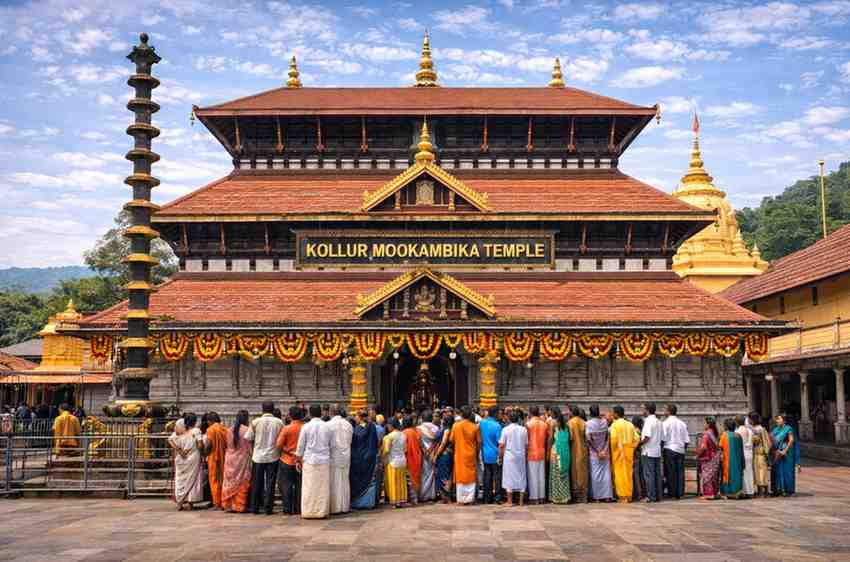
Devotees commonly visit Srikalahasti Temple to perform traditional rites such as Rahu-Ketu Pooja, Sarpa Dosha Nivaranam, Kala Sarpa Shanti, and to seek relief from astrological effects. The temple differs from many others because it remains open even during solar and lunar eclipses — a rare tradition that enhances its spiritual reputation.
The presiding Vayu Lingam is believed to move ever so slightly because of the air element, symbolizing the living presence of Shiva’s wind aspect. Numerous legends are associated with the shrine, including the story of Kannappa, the hunter-devotee whose devotion earned him liberation. Srikalahasti Temple also offers daily worship services, free Anna Prasadam (annadanam) for devotees, and special rituals that attract tens of thousands of pilgrims year-round, especially during festivals like Maha Shivaratri and Karthika Masam.
Kollur Mookambika Temple 2026: A Complete Guide
Srikalahasti Temple Overview
| Feature | Details |
|---|---|
| Temple Name | Srikalahasti Temple (Sri Kalahasteeswara) |
| Deity | Lord Srikalahasteeswara (Shiva), Gnana Prasunambika Devi (Parvati) |
| Location | Srikalahasti, Tirupati district, Andhra Pradesh, India |
| River | Swarnamukhi River |
| Historical Age | Built over centuries since 10th century CE |
| Element | Vayu Lingam (Air element) |
| Famous Poojas | Rahu-Ketu, Sarpa Dosha, Kala Sarpa |
| Free Darshan | Available daily |
| Special Tickets | Around ₹200, ₹500 and ₹1500 (varies) |
| Temple Timings | 5:30 AM – 9:00 PM |
| Annadanam | Free meals for ~1,600-2,000 daily |
| Nearest Railway | Sri Kalahasti (KHT) (~3 km) |
| Nearest City | Tirupati (~36 km) |
Srikalahasti Temple Timings
Srikalahasti Temple operates daily with rituals, darshan windows, and special poojas from early morning to night. These timings help visitors plan pilgrimage schedules around essential services.
| Timing Category | Hours |
|---|---|
| Temple Opens | 5:30 AM |
| Suprabhatha Seva | 5:30 AM – 6:00 AM |
| Morning Abhishekam & Poojas | 6:00 AM – 9:00 AM |
| General Darshan | 6:00 AM – 9:00 PM |
| Rahu-Ketu Pooja Window | 6:00 AM – 6:00 PM |
| Afternoon Break (approx) | 12:30 PM – 1:30 PM |
| Evening Pooja & Harathi | 6:00 PM – 8:30 PM |
| Free Anna Prasadam | 11:00 AM – 3:00 PM & 7:30 PM – 8:30 PM |
| Temple Closes | 9:00 PM |
The temple’s open hours allow pilgrims to experience morning and evening worship rituals, with special services like Rahu-Ketu Pooja accessible during the day. Free meals are served mid-day and in the evening in specified shifts.
Sevas and Darshans at Srikalahasti Temple
Srikalahasti Temple offers various sevas (ritual ceremonies) and darshan options to suit devotees’ spiritual goals and astrological needs. While general darshan is free, many pilgrims participate in paid rituals that are believed to remove doshas and bring blessings.
| Service / Darshan | Description | Typical Time | Approx. Offering / Price |
|---|---|---|---|
| General Darshan | Free access to temple and deity | 6:00 AM – 9:00 PM | ₹0 |
| Special Darshan Ticket | Priority entry with shorter queues | During darshan hours | ~₹200 – ₹500 |
| Rahu-Ketu Pooja | Ritual to address astrological doshas | 6:00 AM – 6:00 PM | ~₹500 – ₹5000 |
| Sarpa Dosha Nivarana | Remedy for snake dosha effects | Daytime | Donation / ticketed vary |
| Kala Sarpa Shanti | Ritual for peace and balance | Daytime | Donation basis |
| Abhishekam | Sacred bathing of lingam | Morning | Typically donation |
| Other Homams | Ritual fire services for specific needs | Varies | Donation basis |
Prices for Rahu-Ketu Pooja can differ by category, with tiers such as ₹500, ₹750, ₹1500, ₹2500 and higher depending on the type of ritual booked.
How to Reach the Srikalahasti Temple
Reaching Srikalahasti Temple is convenient by multiple modes of transport:
By Rail: The nearest station is Sri Kalahasti Railway Station (KHT), about 3 km from the temple. Trains from major cities like Tirupati, Chennai, Hyderabad and others stop here, making rail travel a popular option.
By Road: The temple town is well connected by road with frequent public and private buses from Tirupati (~36 km), Chennai, Bangalore, Vijayawada and local towns. Auto-rickshaws, taxis and app-cabs provide easy onward travel from bus stands.
By Air: The nearest major airport is Tirupati Airport, which has flights from key Indian cities. From the airport, road transport connects directly to Srikalahasti Temple.
Local Transport: Within the town, short auto or cycle-rickshaw rides are available from transport hubs to the temple gate. Many devotees plan arrival early in the morning to avoid crowds and queue times.
How to Book Darshan Tickets for Srikalahasti Temple
Online Advance Booking: At present, official advance online booking for general darshan or Rahu-Ketu poojas via external portals is limited, and devotees are advised to check the official temple site or link pages for authentic services before arriving.
On-Site Counters: Special darshan tickets and pooja tickets for Rahu-Ketu and other rituals are commonly purchased directly at counters inside the temple complex when you arrive. It’s recommended to be at the temple at least 1–2 hours before the seva start time to secure tickets, especially if you want the ritual during favourable times such as Rahukalam.
Telephone / Contact Booking: Temple offices offer help via phone for enquiries about pooja tickets, timings, and accommodation. Official contact numbers include the temple information office and administrative office listed at temple authority counters.
Nearby Attractions
While visiting Srikalahasti Temple, travellers can explore nearby spiritual and cultural places that enhance the pilgrimage experience:
Kannappa Hill and Shrine: Close by hill shrine associated with the legend of Kannappa, offering scenic views and a devotional site.
Swarnamukhi River Bank: Serene riverside areas where many devotees take a moment of reflection before or after darshan.
Tirupati City: Only 36 km away, Tirupati offers additional temples, markets, and cultural sites such as Tirumala Venkateswara Temple.
Local Ayurveda & Devotional Markets: Streets around Srikalahasti have shops offering religious items, local snacks, devotional wear, and traditional medicinal products.
Nature Walks: The temple’s surroundings with greenery and river ambient provide relaxing spaces to walk and meditate after darshan.
Important Instructions for the Visitors
To make your visit to Srikalahasti Temple smooth and respectful:
- Arrive Early: Being early helps secure Rahu-Ketu Pooja tickets and positions in darshan queues.
- Respect Dress Code: Worshippers are expected to wear modest, traditional clothes suitable for temple environments.
- Footwear Rules: Remove shoes at designated stands before entering inner temple precincts.
- Photography Etiquette: Follow signs about where photography is allowed; inner sanctums may restrict cameras.
- Queue Discipline: Follow marked lanes and staff instructions for free or special darshan lines.
- Hydration & Weather: Srikalahasti can be warm, so carry water and plan breaks at shaded areas.
- Donations: Only use official donation boxes or counters; avoid unofficial touts.
- Safety: Keep an eye on children and personal items, especially near river banks and busy crowds.
Accommodation Options Near Srikalahasti Temple
Devotees visiting for darshan and rituals can choose from a range of nearby stays in Srikalahasti town:
| Accommodation Type | Approx. Price (INR/night) | Notes |
|---|---|---|
| Budget Guesthouses | ₹500 – ₹1,000 | Simple clean rooms near temple |
| Mid-Range Hotels | ₹1,000 – ₹2,000 | Comfortable stays with AC options |
| Premium Hotels | ₹2,000 – ₹4,000 | Better amenities and service |
| Temple Guest Rooms | ₹800 – ₹1,500 | Managed by temples or trusts |
| Homestays / B&B | ₹1,000 – ₹2,000 | Local hospitality and meals |
Booking ahead during Maha Shivaratri or Karthika Masam is recommended as rooms fill quickly due to pilgrim influx.
Dos and Don’ts at Srikalahasti Temple
Dos:
- Arrive early to secure pooja tickets and reduce wait times.
- Dress modestly and follow temple protocols.
- Use only official counters for tickets and donations.
Don’ts:
- Don’t carry prohibited items into inner sanctum areas.
- Avoid loud behavior or disrespect near rituals.
- Do not rely on unofficial online ticket sellers.
FAQs About Srikalahasti Temple
Is entry to Srikalahasti Temple free?
Yes, general darshan at Srikalahasti Temple is free for all devotees.
What are the daily temple hours?
The temple is typically open from around 5:30 AM to 9:00 PM daily.
Can I book Rahu-Ketu Pooja tickets online?
Official online booking options are limited; most devotees buy Rahu-Ketu Pooja tickets at on-site counters.
When is the best time to visit?
Visit during mornings or Maha Shivaratri and Karthika Masam for deeper spiritual experience.
Is there free food for devotees?
Yes, free Anna Prasadam is served in batches for many devotees, often in midday and evening shifts.
How far is the nearest railway station?
Sri Kalahasti Railway Station (KHT) is approximately 3 km from the temple.