
The Shri Saptashrungi Nivasini Devi Temple is one of India’s most revered and ancient shrines, embodying the supreme power of the Divine Mother. Perched at an altitude of 1,230 meters (4,035 feet) on the rugged cliffs of the Sahyadri mountain range, this temple is the abode of Goddess Saptashrungi. The name itself means “The Goddess who Resides on the Seven Peaks” (Sapta-Seven, Shrungi-Peaks), derived from the seven imposing hills that surround and protect this sacred site.
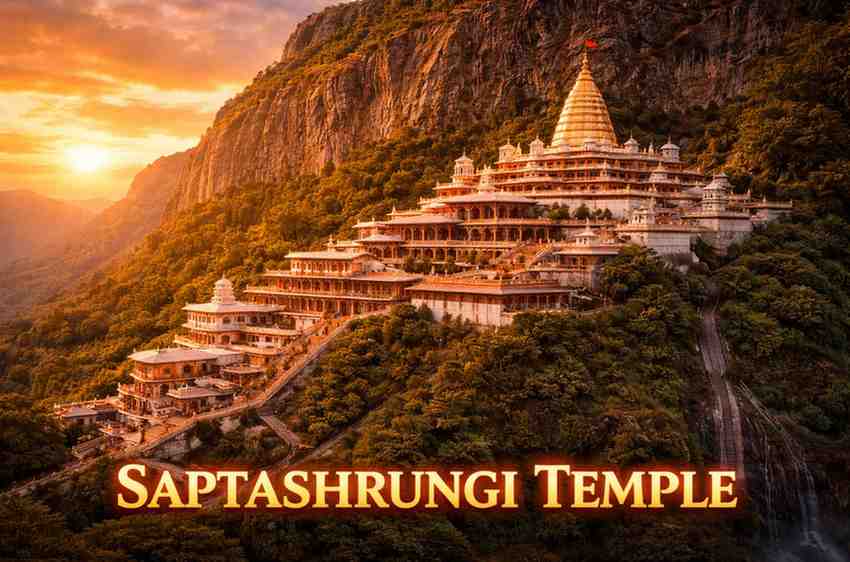
This temple holds immense religious significance as one of the 51 Maha Shakti Peethas. According to ancient Hindu scriptures, it is the place where the right arm of Goddess Sati fell, sanctifying it as a powerful seat of Shakti (divine feminine energy). It is also counted among the “Sāḍe Tīn” or “Three and a Half” principal Shakti Peethas of Maharashtra. The primary deity is an awe-inspiring, eight-foot-tall, swayambhu (self-manifested) rock idol of the Goddess in the form of Mahishasura Mardini, depicted with 18 arms holding various divine weapons.
Palani Murugan Temple 2026: Easy Timings, Alangaram
Saptashrungi Temple 2026 Overview
| Detail Category | Specific Information |
|---|---|
| Primary Deity | Goddess Saptashrungi Nivasini (Mahishasura Mardini) |
| Location | Vani/Nanduri Village, Kalwan Taluka, Nashik District, Maharashtra |
| Altitude | 1,230 meters (4,035 feet) |
| Significance | One of the 51 Maha Shakti Peethas; one of Maharashtra’s 3.5 main Shakti Peethas |
| Important Festivals (2026) | Chaitra Navratri (Mar/Apr), Sharadiya Navratri (Sep/Oct), Chaitra Purnima |
| Best Time to Visit | October to March (pleasant weather) |
| Official Governing Trust | Shree Saptashrungi Nivasini Devi Trust, Saptashrung Gad |
| Official Website | https://ssndtonline.org/ (For online darshan, donations, pooja services) |
Daily Temple Timings and Ritual Schedule
The temple is open for darshan throughout the year on a fixed schedule, with extended hours during major festivals. The day is structured around key rituals (pujas) and aartis. Please note that the inner sanctum may be closed for darshan for brief periods during these rituals. The table below outlines the standard daily schedule.
Sevas, Darshans, and Offerings
General darshan at the temple is free for all devotees. The trust offers special paid services (sevas) for a closer spiritual experience and to support temple activities. The official website is the primary portal for booking these services. The table below lists common offerings.
How to Reach the Temple
Reaching the temple involves travel to Nashik followed by a road journey and a final ascent to the hilltop. The temple is located about 60 km from Nashik city.
- By Air: The nearest airport is Nashik Airport (ISK), approximately 53-80 km away. The nearest major international airport is Chhatrapati Shivaji Maharaj International Airport (BOM) in Mumbai, about 220-260 km away.
- By Train: The nearest major railway station is Nashik Road Railway Station, about 70-78 km from the temple. It is well-connected to Mumbai, Pune, and other major cities.
- By Road: The temple is well-connected by road via State Highway 17. Regular state transport (MSRTC) and private buses run from Nashik’s Central Bus Stand to the base villages of Vani/Nanduri.
- Final Ascent to the Temple:
- Funicular Ropeway (Recommended): A modern trolley system (funicular) takes about 3 minutes to ascend, drastically reducing the climb. It operates from around 6:00 AM to 9:00 PM on regular days and for extended hours during festivals.
- Traditional Steps: For the devout, there is the option to climb the historic 510 steps from the base to the temple.
How to Book Darshan and Seva Tickets
The Shree Saptashrungi Nivasini Devi Trust manages all services through its official website and on-site counters.
- Online Booking (Primary Method):
- Visit the official temple website: https://ssndtonline.org/.
- Navigate to the ‘Services’ section for options like live darshan, pooja booking, and donations.
- To book a special darshan pass or other sevas, look for the “Darshan Booking” or “Online Pass” link, select your date and time slot, enter details, and make a secure online payment.
- You will receive a confirmation via SMS or email, which you must present at the temple.
- On-Site (Offline) Booking:
- Special Darshan Tickets: Can be purchased at the ticket counters located near the temple entrance for approximately ₹50 per person.
- Other Sevas/Poojas: Inquiries and bookings for specific rituals can be made at the temple’s administrative office.
- General Darshan: No booking is required. Join the free queue.
Important Tip: Online booking is highly recommended, especially for weekends, public holidays, and during the nine days of the Navratri festival, when millions of devotees visit.
Nearby Attractions to Visit
The region around Nashik and the temple is rich in spiritual and natural beauty.
- Trimbakeshwar Temple: One of the 12 Jyotirlingas of Lord Shiva, located about 75 km away. It is a very holy and powerful temple.
- Panchavati, Nashik: A famous pilgrimage area in Nashik city. It has sites like the Kalaram Temple and Sita Gufa linked to the epic Ramayana.
- Sula Vineyards: If you like wine, Nashik is India’s wine country. You can take a tour of the vineyards and taste different wines.
- Anjaneri Hills: Believed to be the birthplace of Lord Hanuman. It is a good place for a trek with nice views.
Important Instructions for Visitors
Following temple etiquette ensures a respectful and smooth experience for everyone.
- Dress Code: Modest, traditional attire is expected and shows respect. Men are advised to wear a dhoti, kurta, or formal trousers with a shirt. Women should wear a saree, salwar kameez, or a long skirt. Avoid shorts, miniskirts, sleeveless tops, and revealing clothing.
- Footwear: Removing footwear is mandatory before entering the temple premises. Use the paid or free shoe stands available.
- Photography: Photography and videography are strictly prohibited inside the main temple complex and sanctum sanctorum. Always look for signs or ask for permission.
- Ropeway Use: For the funicular, purchase tickets at the base station. Be prepared for queues on busy days. It is a very quick and convenient way to go up.
- Silence and Cleanliness: Maintain a quiet and respectful demeanor within the temple. Do not litter; use the dustbins provided.
Accommodation Options for Pilgrims
The temple trust provides basic accommodation, and more options are available in nearby towns.
Dos and Don’ts at the Temple
Frequently Asked Questions about the Temple
Q1: Why is Saptashrungi called a ‘Half’ Shakti Peetha?
It is considered one of the “Three and a Half” Shakti Peethas of Maharashtra. The “half” designation signifies its unique and paramount status as the Adi (original) Shakti Peeth, from where the other manifestations are believed to have emerged, not a lesser importance.
Q2: Is the ropeway (funicular) operational? How much does it cost?
Yes, the modern funicular trolley is fully operational and is the most common way to ascend. It takes only 3 minutes. While the exact fare for 2026 should be confirmed on-site, it is a nominal fee. It runs from early morning until late evening.
Q3: What is the best time to visit to avoid crowds?
Weekdays (Monday to Thursday) are generally less crowded than weekends. The ideal months for a peaceful visit with pleasant weather are from October to March, outside the major festival periods.
Q4: Can I perform a special pooja for my family?
Yes, you can book various poojas like Abhishekam (holy bath) or Maha Pooja. This can be arranged by contacting the temple trust office directly or potentially through the online services portal on their official website.
Q5: Is there any significance to the 108 water bodies (Kundas) mentioned?
Yes, the hills surrounding the temple are said to have 108 sacred water ponds or kundas. Pilgrims often perform a ritual circumambulation (parikrama) of the hill, which takes about a day, visiting these kundas.